
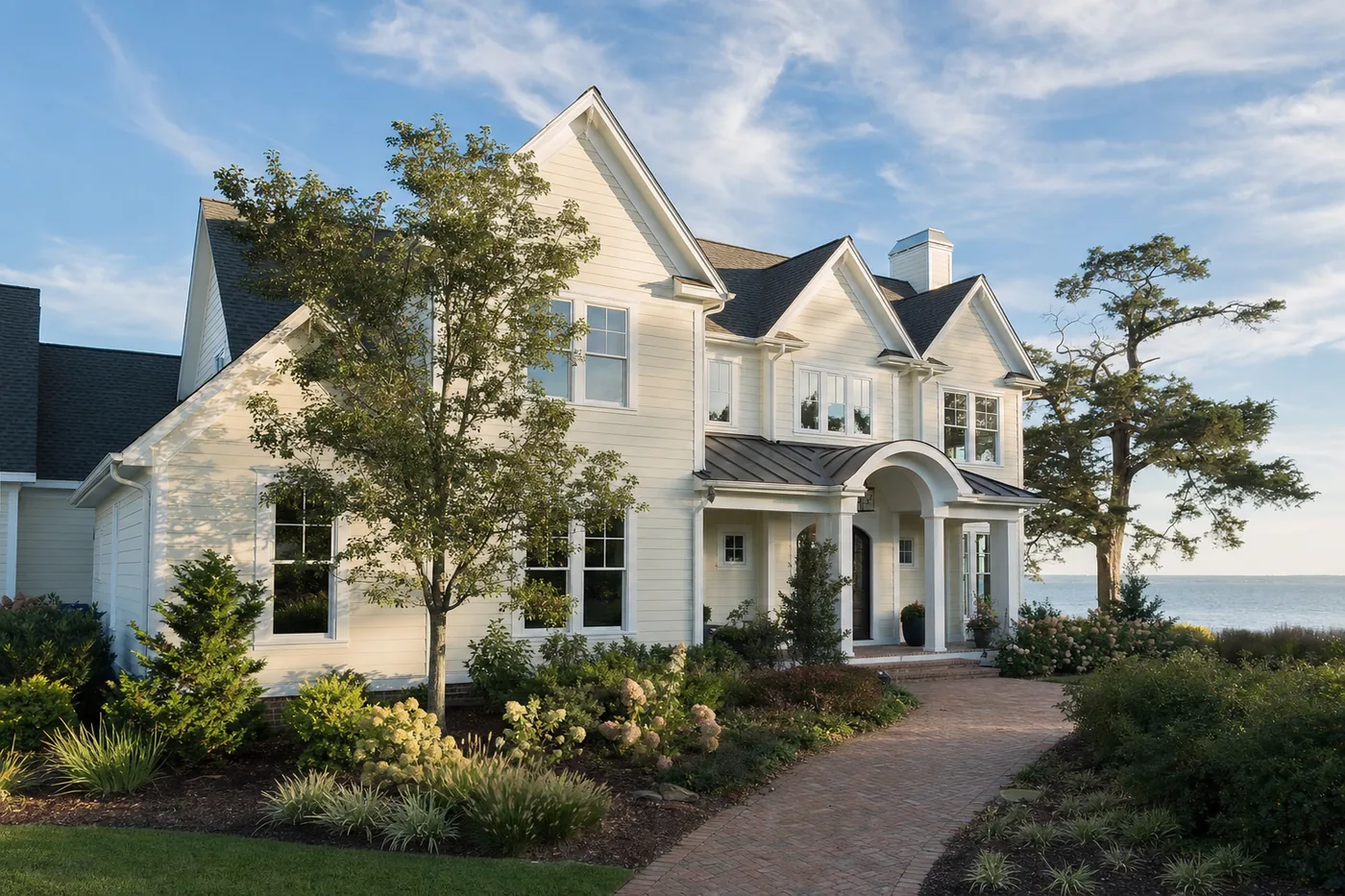
Exterior & Envelope
The weather-facing shell keeps the interior work honest.
Siding, trim, windows, exterior doors and the roofing envelope — detailed for coastal Virginia wind, rain, humidity and the occasional hurricane band.
Why we sell envelope work as a category
Interior work is only as good as the envelope holding it.
The most expensive renovation call we get is when an interior remodel from three years ago is being torn out because a hidden envelope failure — a bad flashing detail, an under-flashed window, a roof-wall junction that was never kick-flashed properly — has been feeding water into the wall cavity ever since. We treat envelope as its own scope so it gets the attention it deserves and doesn't become the cheap line-item that undoes everything else.
Scope
Envelope scopes we handle
Siding & trim
James Hardie fiber-cement, pre-primed and factory-painted panels, or engineered wood siding when the aesthetic calls for it. Removal of old siding to sheathing, water-resistive barrier updated (Tyvek or equivalent), and rain-screen furring where the wall assembly benefits.
Windows & exterior doors
Full replacement with pre-flashing at the rough opening: sill pans, side and head flashing tape, and drip caps that lap over the water-resistive barrier correctly. Coastal-hurricane windows spec'd where required. Interior trim and casing detailed after the window is watertight.
Roofing envelope
Architectural asphalt shingle, standing-seam metal, or synthetic slate depending on the house and the budget. Ice-and-water membrane at eaves, valleys, and penetrations. Ridge vent, soffit vent, and attic ventilation calculated together — not left to whoever tears off the shingles.
Flashing & water management
Step flashing at every roof-wall junction, kick-out flashing at eave-to-wall terminations (the single most common miss on badly built houses), and counter-flashing set into brick or stone. Where we find previous work done poorly, we replace it before residing rather than roofing over the problem.
Gutters & downspouts
Seamless aluminum in a color coordinated with the trim, sized to the roof area, and terminated to daylight or a splash block set well away from the foundation. Underground drainage tied in for larger roofs.
Exterior lighting & landscape tie-in
Coach lights, wall-washing sconces, and pathway lighting rough-in coordinated with the siding installation so no penetrations are made through fresh cladding.
How we do it
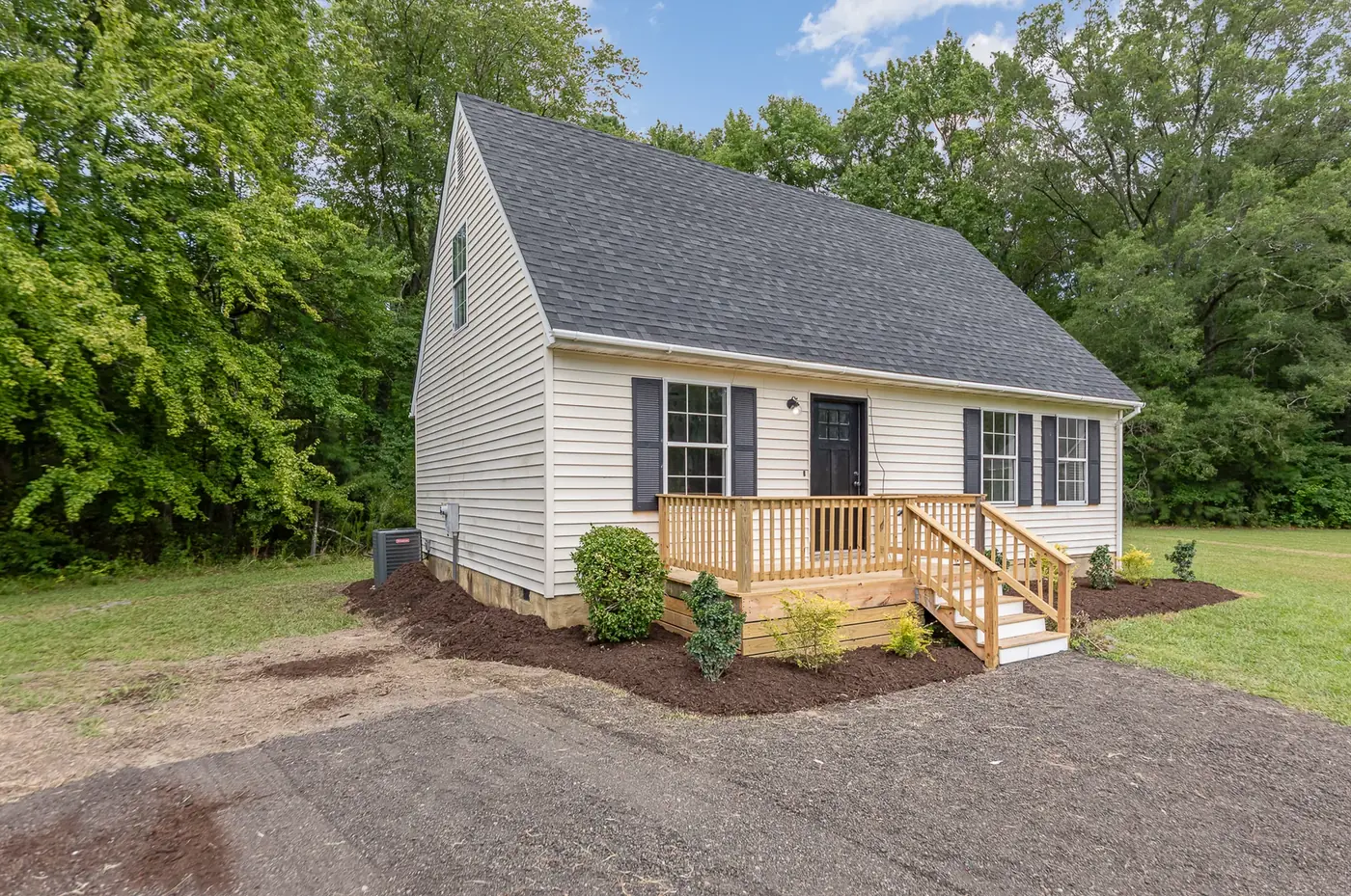
How an envelope project moves
01. Envelope assessment
Perimeter walk with ladder — every visible flashing, every window sill, every roof-wall junction, and the attic. Photos taken and delivered as part of the assessment scope.
02. Selections
Siding profile, exposure, and color; window brand and grid pattern; roofing color and material; trim detail. All decided against a physical sample board before the contract is signed.
03. Contract & ordering
Windows and specialty roofing materials have lead times; we order the week the contract is signed. Standard shingles and Hardie siding are usually in stock.
04. Tear-off & underlayment
Old siding off, WRB inspected and replaced. Old roofing off, deck inspected and any rotted sheathing replaced. Ice-and-water and underlayment down before any new cladding starts.
05. Cladding, trim, and finish
New siding installed with proper reveal and expansion, trim mitered and back-caulked, and paint touch-up where a factory finish doesn't cover a cut edge. Final walk includes a ladder inspection with the client.
Representative work
Envelope scopes we run regularly
These are generic scope examples drawn from work we have completed across Hampton Roads. Specific homeowner details are withheld to respect client privacy.
Example scope
Full siding & window replacement
Original 1990s vinyl siding removed, damaged sheathing replaced, house re-wrapped, and Hardie plank installed. All twenty-two windows replaced with insulated-glass units, sills pre-flashed properly. Twelve to sixteen weeks.
Example scope
Standing-seam metal re-roof
Existing asphalt shingle removed, deck inspected, ice-and-water at eaves and valleys, high-temp underlayment, and 24-gauge standing seam in a matte charcoal finish. Ventilation calculated and rebuilt at ridge and soffit.
Example scope
Storm-damage envelope repair
Hurricane band tore a section of siding off and damaged the underlying WRB. Scope replaced the damaged sheathing, updated the water-resistive barrier for the full elevation, and installed matching Hardie siding tied cleanly into the un-damaged adjacent walls. Insurance-claim work — coordinated with the adjuster and documented at each stage.
Example scope
Whole-home envelope refresh
Executed as part of a whole-home renovation — new windows, new front and rear doors, new gutters, and repaint of existing siding rather than replacement (siding still had life). Coordinated so no penetrations were made after painting.
Common questions
Exterior & envelope FAQ
Do we specialise in Hardie or vinyl?
We install both. Hardie fiber-cement is more expensive up front and lasts longer with less maintenance. Vinyl is a real product for a real budget and modern profiles look much better than the vinyl homeowners remember from the '90s. We walk clients through the tradeoff honestly.
What windows do we recommend for coastal Virginia?
For most Hampton Roads homes we spec Andersen 400 or 100 series, Marvin Elevate, or Pella Lifestyle. For beachfront or heavy-storm exposure we spec impact-rated units. We do not have exclusive contracts with any window brand — the recommendation is based on the house.
How long does re-siding a house take?
For a typical 2,500-square-foot Hampton Roads home: eight to twelve weeks with normal weather. Longer if we're also replacing windows and doors, or if sheathing repairs are more extensive than the assessment showed.
What is the biggest cause of envelope failure we find?
Missing kick-out flashings at eave-to-wall terminations. It's a small piece of formed metal that costs $12 and takes two minutes to install; without it, water pours behind the siding at the trim corner and rots the wall for a decade before anyone notices. We check every one during the assessment.
Are envelope projects covered by insurance?
Storm damage often is; wear-and-tear is not. If a storm has caused damage that we're documenting for a claim, we work with the adjuster and provide photos, scope, and pricing that satisfies the claim process. We do not inflate scope to fit insurance.